


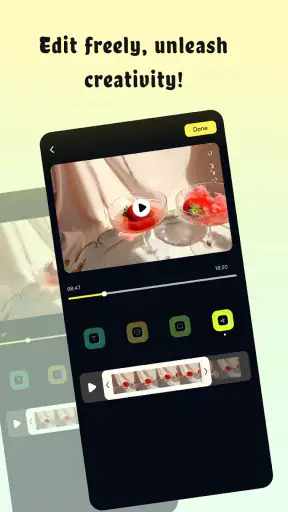

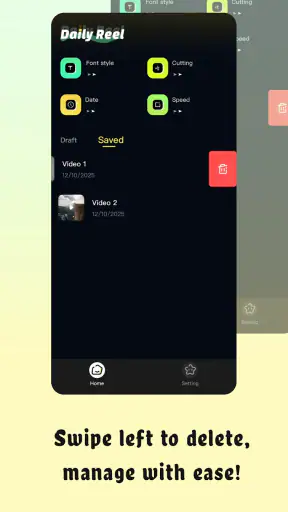
I spent time with DailyReel:Movie Guide & Editor as an entertainment app that brings two different habits together: keeping up with movies and television, then turning selected moments into short, edited video posts. That combination makes it more interesting than a basic watchlist, although it also means the app is trying to serve two audiences at once. Someone looking only for a clean movie guide may find the editing tools more than they need, while a casual creator may appreciate having a viewing-focused space beside the creative tools.
The app is free to use, carries an Everyone content rating, and runs on Android 7.0 or later. It comes from rea reo hore hore, and its current release is version 1.0.4. I would describe it as a lightweight companion for people who like discovering entertainment and documenting it visually, rather than as a complete replacement for a streaming service, a professional editor, or a dedicated film database.
How the free experience earns its place
The most important value point is straightforward: there is no purchase price attached to the app. That makes it easy to try without committing money first, which suits an entertainment tool whose usefulness depends heavily on personal habits. If you already keep notes about what you watch or enjoy making short cinematic clips, the free entry point lowers the risk of experimenting with both sides of the app.
The app has attracted over a million installs and holds a 4.1 average from around 700 ratings, with roughly 80 written reviews. Those figures suggest that it has reached a meaningful audience, but they should not be mistaken for a guarantee that every feature will fit your routine. I found the strongest value in the way the viewing and editing ideas sit together, not in any single replacement for a specialist service.
That distinction matters when comparing it with alternatives. A streaming platform is better at actually playing licensed video, a dedicated watchlist service is usually better when all you want is organized tracking, and a full mobile editor will normally offer more control for serious production. DailyReel makes more sense when you want a single entertainment-oriented workspace rather than maximum depth in one narrow task.
The free price makes trying the app sensible, but the real value comes from whether its two-part workflow matches your habits. I would not install it expecting a complete cinema encyclopedia or a professional editing suite. I would install it to see whether discovering shows and shaping small visual recaps feels more convenient together than using separate apps.
What the movie and television side is good for
The guide portion is most useful at the moment when you are deciding what to watch next. Instead of treating movies and television as unrelated searches, it gives the experience a more personal, ongoing feel. I found that useful for building a mental queue: a film I wanted to remember, a show I planned to continue, or a title that might work for a particular evening.
A practical routine is to check the guide before opening a streaming app, choose one or two possibilities, and then use the editor afterward to preserve a visual impression. This avoids the common problem of browsing endlessly through streaming catalogs without recording what caught your attention. The app is not valuable because it eliminates every other entertainment tool; it is valuable because it can sit between discovery and personal documentation.
For television viewers, the tracking idea is especially appealing when several shows are competing for attention. I could use a simple habit of checking the app after finishing an episode, updating my place, and leaving the title in a more deliberate list rather than relying on memory. That is a small change, but it helps when streaming services split viewing history across different platforms.
There is also a useful social or creative angle. A short edited clip can communicate why a scene, mood, or visual style stayed with you more naturally than a plain text note. Someone who keeps a film diary may prefer a compact cinematic entry to a list of titles with no context. The app therefore works best when tracking is not the final goal, but the beginning of a small personal archive.
Editing clips without turning the task into a project
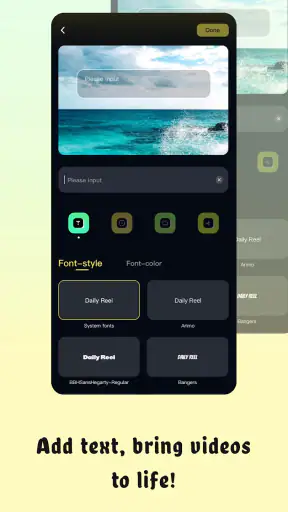
The editing tools focus on two approachable ideas: subtitles and cropping. Those choices are modest compared with a full editor, but they are practical. Cropping helps adapt footage to the shape you want to present, while subtitles can make a short clip easier to understand when sound is low or when the words themselves are part of the moment.
I like this narrower approach for quick posts and private viewing notes. It encourages decisions rather than endless tweaking: choose the useful frame, add readable text, and keep the mood intact. If you are preparing a polished short film with layered audio, transitions, color work, and precise timing, you will probably outgrow the tool quickly. If you are making a brief cinematic memory, the limited scope can actually reduce friction.
One non-obvious advantage is that cropping should be considered before adding subtitles. A line that fits comfortably on the original frame may become cramped after the image is trimmed. My practical workflow would be to select the final framing first, preview the result on a small phone screen, and only then add the shortest subtitle that carries the meaning. That order saves rework and keeps text from becoming the visual focus.
Subtitles also need restraint. They are useful for a spoken line, a location, or a short reaction, but they can overwhelm a quiet clip when written like a paragraph. I would treat them as part of the composition rather than as a transcript. The best result is likely to come from short phrases placed where they do not cover the subject or the key visual detail.
Cropping has a similar tradeoff. A tighter frame can make a clip feel more intentional, but it can remove context that explains what the viewer is seeing. For a scene with a person, I would preserve enough surrounding space to avoid making the result feel accidental. For a landscape or architectural shot, a more aggressive crop may help direct attention. The tool is simple, but the decision still benefits from thinking like an editor.
A realistic everyday workflow
Imagine finishing work on a Friday and wanting to choose something to watch without opening several services. I would use the guide to collect a movie and a television option, watch one of them elsewhere, and then return to DailyReel to record the experience through a short clip. If the footage has distracting empty space, I would crop it; if the clip depends on a line of dialogue, I would add a concise subtitle. The result is not a formal review, but a visual reminder of the evening.
Another useful scenario is a group recommendation. Friends often send a title with no explanation beyond “you should watch this.” A carefully cropped moment with a short subtitle can express the tone more clearly than a long message. The app is well suited to that kind of lightweight recommendation, especially for people who would rather show a mood than write a detailed analysis.
For a personal watch journal, I would avoid editing every title. That would turn a convenient habit into maintenance. A better approach is to create clips only for films or episodes that have a distinct visual identity, a memorable exchange, or a mood worth keeping. The tracking function can remain routine, while the editor is reserved for highlights. This separation keeps the app useful without making it feel like another obligation.
Where the tradeoffs become noticeable
The biggest tradeoff is breadth versus depth. DailyReel combines a movie guide, television tracking, and basic cinematic editing, so it cannot be judged by the standards of a specialist in each area. The guide may feel less focused than a dedicated tracking app, and the editor may feel less capable than a purpose-built video application. That is not automatically a flaw; it is the cost of having both functions in one place.
I would also be cautious about treating the app as the only place for serious media organization. If you manage a large library, need detailed metadata, or want advanced filtering and sorting, a dedicated cataloging service may suit you better. Likewise, creators who need fine control over timing, sound, effects, or multiple layers should go directly to a more advanced editor instead of expecting this app to grow into one.
The subtitle and crop tools can make a clip more presentable, but they do not remove the need for good source material. A poorly framed recording remains difficult to rescue with a crop, and text cannot compensate for a clip that lacks a clear point. I see the app as a finishing tool for selected moments, not a magic solution for rough footage.
There is a mental cost to switching between discovery and creation, too. Some users will enjoy the connection, while others will find the two modes unrelated. If your only goal is to track episodes, the editing side may feel like clutter. If your only goal is fast video production, the entertainment guide may slow down the path to the timeline. The right choice depends on whether those activities naturally belong together for you.
Because the app is free, I would judge these tradeoffs by time rather than by purchase risk. You are not paying to test the workflow, but you are still investing attention in learning where it fits. A short trial is worthwhile; keeping it installed indefinitely makes sense only if it replaces a repeated inconvenience in your current routine.
Who is most likely to get real value
I think DailyReel is a strong match for casual movie fans who want more than a passive list. It suits people who discover titles across different services, forget what they intended to watch, and enjoy preserving a visual reaction. It is also a natural fit for viewers who already make short posts or private video diaries and want their entertainment interests close to that process.
It may appeal to younger users and families as well, since the content rating is Everyone and the interaction is centered on entertainment discovery and simple editing. Still, an age label does not tell you whether the workflow will be engaging for every person. Someone who does not care about creating clips will probably get more from a focused guide, while someone who rarely watches movies or shows has little reason to keep a specialized tracker.
I would recommend trying it for a week of normal viewing rather than testing it with an artificial project. Track the titles you genuinely encounter, edit only one or two clips, and notice whether the combination saves steps. If you find yourself opening it only to perform duplicate work that another app already handles better, its free price does not make it valuable enough to keep using.
It is less suitable for professional creators, detailed film researchers, and viewers who expect a streaming library inside the app. Those users need depth, precision, or direct playback more than a blended entertainment companion can provide. A dedicated editor is the better choice for production; a specialist catalog is better for serious collection management; and a streaming service remains the place to watch content when licensing and playback are the priority.
My verdict on installing it
My overall impression is positive but specific. DailyReel is not trying to win by being the most advanced tool in either movie tracking or video editing. Its appeal is the bridge between the two: discover something, remember it, and give the memory a small visual form. That is a useful idea for people whose entertainment habits already include sharing clips, keeping watch notes, or collecting moods.
The free access makes the decision easy because there is no purchase barrier to weigh against the workflow. I would recommend installing it if you want to experiment with a combined movie guide and cinematic clip editor, especially when subtitles and cropping cover most of what you need. Start with a real viewing routine, use cropping before text, and reserve editing for moments that deserve attention rather than every title you finish.
I would skip it when your needs are clearly narrower. Choose a dedicated tracker for detailed lists, a streaming platform for playback, or a more capable editor for serious video work. For everyone else, the app is worth a trial because its best quality is not a single headline feature; it is the convenience of connecting what you watch with how you remember and share it.
With its Everyone rating, support for Android 7.0 and later, and current version 1.0.4, it is accessible to a broad range of Android users. My final recommendation is therefore conditional but clear: try DailyReel if your watchlist and your creative side belong in the same routine. If they do, the free app can become a pleasant entertainment journal; if they do not, its combined design will feel unnecessary rather than helpful.


